Showing posts with label Friends. Show all posts

Wednesday, March 09, 2016

Midweek Meditation: "Caring Friendship"

Henri Nouwen (1932-1996)
"Real care is not ambiguous. Real care excludes indifference and is the opposite of apathy. The word 'care' finds its roots in the Gothic 'Kara' which means lament. The basic meaning of care is: to grieve, to experience sorrow, to cry out with. 

I am very much struck by this background of the word care because we tend to look at caring as an attitude of the strong toward the weak, of the powerful toward the powerless, of the ‘haves’ toward the ‘have-nots.' And, in fact, we feel quite uncomfortable with an invitation to enter into someone’s pain before doing something about it. Still, when we honestly ask ourselves which persons in our lives mean the most to us, we often find that it is those who, instead of giving much advice, solutions, or cures, have chosen rather to share our pain and touch our wounds with a gentle and tender hand. The friend who can be silent with us in a moment of despair or confusion, who can stay with us in an hour of grief and bereavement, who can tolerate not-knowing, not-curing, not-healing and face with us the reality of our powerlessness, that is the friend who cares." (Henri Nouwen)

Monday, July 13, 2015

BookPastor >> "The Ultimate Gift" (Jim Stovall)

TITLE: The Ultimate Gift (The Ultimate Series #1)
AUTHOR: Jim Stovall
PUBLISHER: Colorado Springs, CO: David C. Cook Publishers, 2007, (156 pages).

Red Stevens had died. He had also left a will that determines how his riches would be distributed. Eagerly, his family members gather around to hear what they would be getting from their rich relative through a lawyer friend, Theodore J. Hamilton. The will executioner holds a document that would decide how the $1billion inheritance would be discharged. Alas! The initial excitement for the family members became a disappointment when they did not get what they hoped to get. The last to depart from the disappointing meeting was Jason Stevens, the grand-nephew of Red Stevens. Just when he was about to leave, he was given a video tape. Inside this video contains instructions that essentially offers Jason a stark choice. He can either follow the instructions strictly to the letter or simply walk away. The condition is that over a period of a year, he would have to pass a test every month. He would need to pass each test before proceeding to the next. If any test had been either incomplete or unsatisfactorily done, Jason would receive nothing more. The rest of the book details how Jason character was changed at the completion of each assignment. Most remarkable was the lessons the came with each test. Below are snippets of lasting lessons that Jason had learnt in the process of completing the assignments.
  • Work: He who loves his work never labors.
  • Money: Money is nothing more than a tool. It can be a force of good, a force of evil, or simply be idle.
  • Friends: It is a wealthy person, indeed, who calculates riches not in gold but in friends.
  • Learning: Education is a lifelong journey whose destination expands as you travel.
  • Problems: Problems can only be avoided by exercising good judgment. Good judgment can only be gained by experiencing life’s problems
  • Family: Some people are born into wonderful families. Others have to find or create them. Being a member of a family is a priceless privilege which costs nothing but love.
  • Laughter: Laughter is a good medicine for the soul. Our world is desperately in need of more such medicine. Dreams: Faith is all that dreamers need to see the future.
  • Giving: The only way you can truly get more out of life for yourself is to give part of yourself away.
  • Gratitude: In those times when we yearn to have more in our lives we should dwell on the things we already have. In doing so, we will often find that our lives are already full to overflowing.
  • A Day: Life at its essence boils down to one day at a time. Today is the day!
  • Love: Love is a treasure for which we can never pay. The only way to keep it is to give it away.
Like the conditioning of the soul, and the blossoming of a person's character, Jason overcame each assignment with increasing determination. As his perspective changes from arrogance to humility, unappreciative to gratefulness, his wisdom to deal with wealth and riches also increases. This is exactly what the wise Red Stevens had in mind. The late billionaire had learnt how free handouts have often brought about the worst in people who never truly learn the more important things in life. This reminds me of the wisdom in Proverbs 28:6, "Better a poor man whose walk is blameless than a rich man whose ways are perverse."

We all need to be wise with what we have. For those of us who have been working and have accumulated a sizable amount of assets and wealth, one of the biggest concerns is how to go about distributing them. Do we give all of them to our children? How do we decide who gets what? What about grace in giving? How do we give away our wealth wisely? Not many books can offer brilliant advice with simplicity and with such powerful narrative. Though this novel is fictional, the things and virtues talked about in the book is very real. Pick up this book and read away. Then, buy a couple to give away, especially for those of us who know of wealthy people in their last phases of life.

conrade

Monday, June 29, 2015

BookPastor >> "Spiritual Friendship" (Wesley Hill)

This review was first published at Panorama of a Book Saint.

conrade


TITLE: Spiritual Friendship: Finding Love in the Church as a Celibate Gay Christian
AUTHOR: Wesley Hill
PUBLISHER: Grand Rapids, MI: Brazos Press, 2015, (160 pages).

Must all relationships be sexual in one way or another? Is there a place for celibacy in the modern debate over homosexuality? Can there be genuine friendships without any sexual connotations?More importantly, is there a place for friendship in spite of one's sexual orientation? According to Wesley Hill who is celibate and also gay, the answer is yes. In this book about spiritual friendship, Hill attempts to show us that friendship is "the freest, the least constrained, the least fixed and determined, of all human loves" and "entirely voluntary, uncoerced, and unencumbered by any sense of duty or debt."  He believes that friendship must stand alone and above all kinds of opinions or prejudices. He sees Simon bearing Jesus' cross as "an icon of friendship." He separates the idea of sexual attraction from the development of true spiritual friendship. Having done that, he moves toward distilling the essence of spiritual friendship based on acceptance, grace, and love. Hill believes that the gospel says "No" to same-sex relationships but "Yes" to spiritual friendship that is not necessarily sexual in any way. This sets him on a path to finding out love as a celibate and spiritual friendship without sexual implications.


Friday, July 05, 2013

Good End of Life

I was inspired when I watched this TED Talk by Judy MacDonald Johnston. With only a sample size of two persons that she had the privilege of walking and sharing life with, she lets us in on the five practices we can all adopt in preparing for an end of life. After all, we will all die one day. The only difference is when.

She begins with "What would be a good end of life?" What are the chances of dying well? For Johnston, it is about taking seriously both living well, as well as dying well. The five practices are:

  1. Make a Plan
  2. Recruit Advocates
  3. Be Hospital Ready
  4. Choose a Place and Caregivers
  5. Discuss Last Words
This video is well worth watching. Johnston has said it very well. We all are mostly concerned about "living well." We will also need to be more open and be ready to talk about "dying well."


Johnston has set up a website for anyone wanting to learn what it means and what it takes to die well.


conrade

Friday, February 22, 2013

A Beautiful Video - Befriending a Stranger

This is a beautiful video that brings together total strangers, through a pause during the day. As people opens themselves up, it triggers a response that leads to a beautiful sharing and making new friends. Maybe, we can learn to share more among people, to build relationships without any agenda in mind. Just wanting to reach out and touch a stranger. This world is a much better place with more friends than strangers.


conrade

Wednesday, May 30, 2012

Ten Things I Learn About Using FaceBook

I have been thinking recently about how social media has changed the way we live. Years ago, I was still happily maintaining different emails for work, for home, for Church, and for other social groups. Nowadays, one Facebook account essentially blurs the line. Perhaps, forever. I confess that I was a social media skeptic initially. I held off being active on Facebook, and resisted Twittering for two years. Then I caved. Still, there was a little reticence in my participation. After all, I thought that social media is more a waste of time and a platform for self-publicity, and worse, narcissistic sharing of one's life that paints only the nice parts of what we want to share. Authenticity is painted almost always with a brush of sunshine and smiles.
Facebook me or else..

Life is not like that. I reflect a little bit about social media today, and here are ten things I learn about using Facebook. I use (+), (-), and (+/-) to indicate the somewhat positive, negative, or neutral of using FB.


  1. Number of Friends Do not Equal to Your Worth (+/-)
    I look at some of my Facebook friends and their friends exceed a thousand people! I know of some movie stars whose friends run in the hundreds of thousands. With my tiny group of friends, am I worth less than these popular friends? There are times in which I feel like I am an unknown. There is always a temptation to think of ourselves as less worthy on the basis on the lack of friends or the lack of interaction with existing friends. Yet, the fact is that not everyone is on Facebook. Maybe, it reflects the peers of mine who are mostly Facebook averse. After all, Facebook is a recent phenomena, and one needs not be surprised that numbers of friends on the social media varies for all kinds of reasons, and that does not determine one's worthiness as a friend.
    Still, I admit it makes me question myself when someone else posts a simple word, "Happy" and receives 100 likes, while my hard work in presenting some truth hardly merits any responses.
  2. So Close But Yet So Far (-)
    It takes a click on the button "Accept" in order to connect with a Facebook friend. One can share lots of details on Facebook, but at the end of it all, the person is still a distance away. No emoticon can equal a handshake, a smile, or a warm hug.
  3. You are What You Reciprocate (+/-)
    Years ago, some of my friends told me about the time needed to invest on social media before reaping any dividends. The minimum was 20 minutes a day. Now, I think it is measured in hours. As I observe the interactions happening on Facebook, there is an underlying principle that the key to participation begins with you. If you participate in commenting on other FB friends, there is a higher likelihood of of reciprocal comments on your own posts.
  4. You Truly Get to "Keep In Touch," Finally! (+)
    I label this a plus. It is so common to say to one another to keep in touch. Although we take down our telephone numbers or email addresses, chances are, unless there is a need, most people have very little incentive to actually keep in touch. Like, why keep in touch with a friend from Australia unless you happen to visit Australia?

    FB has changed that. It has become easier to keep in touch, as everyone regardless of their location in the planet sees the same posts at the same time on the same platform.
  5. Narcissism Without Regret (-)
    One peeve of mine is to see a lot of people posting only their strengths, their good news, nice pictures, and suppress their other side. Like movie stars with heavy makeup, many FB personal postings are simply about the "nice" parts of themselves. One case in point is the "LIKE" facility in Facebook posts. There is no UNLIKE button. Perhaps, this has swayed people's ability to talk negatively about themselves.
  6. Privacy? What Privacy? (-)
    I am increasingly skeptical about the kinds of privacy arguments some people have. Each time Facebook changes their privacy settings, some people vehemently complain. Yet, having looked at the kinds of information people share willingly on social media, I cannot help but laugh at the whole irony of it all. People are exposing themselves more than what anything FB can or cannot do.
  7. People Just Like to Share Themselves (+/-)
    This follows from the last point. I am amazed how much information people reveal about themselves. I am still old-school, where I do not want to expose all my life on social media. I notice that people do like to share about themselves. I have seen people confessing in public about them playing with their digital gadgets when sitting on the toilet, and for that matter, revealing intimate parts of their diet, their health conditions, and even their relationships with other friends!
  8. An Evolving Cultural Mixpot (+/-)
    I am still trying to understanding the way different cultures play out on the FB platform. Some people are prolific indeed. They write short quotes that are witty and compelling. Others basically rant away like speaking to a dead log. Still there are others who are caught in the deep throes of sadness and talks in a way that only their "real" friends understand. Across continents, across nation states, across religious and non-religious persuasions, it is hard to perceive the true meaning of the posts. There are others who simply forward news articles without sharing anything about themselves or their opinions. There are also those who share so much of themselves that reading them makes me feel like I am intruding on their privacy. Here is what I do not understand.

    Why do some FB "stars" hardly say anything but the followers and responses come fast and furious. Each comment they make breaks records. Some share 50 posts without a single comment. Others make one comment and gets more than 50 likes or responses. Strange.
  9. High in Contact but Low in Context (+/-)
    It is hard to understand people apart from what they type. FB has a powerful way to enable people to make contact with one another, but very inappropriate for any indepth discussions. I call this "High in contact but low in context." FB lacks the basic nuances of sound, facial expressions, or verbal articulations of a real heart to heart communications.
  10. There's a New Addiction in Town (-)
    Finally, how we use FB on a day-to-day basis reflects our level of addiction to it. If you update FB once a day only, you are probably old-school. If you update as and when you have time, or during specific FB time of the day, you are trying to balance real life with social media life. If you are constantly checking or updating your FB status more than once every hour, I call you a FB Addict.

    One classic test of whether you are a FB addict is this: What are you going to be doing when FB is down?
A Negative Thought from the naysayers (From wallpapers.net)


I know, I know. The higher number of (-) may probably explain that I am old school. I'm still learning ok?


conrade

Tuesday, February 14, 2012

Valentine's Day - A Waste of Time

I know, I know. Some of you may be up in arms against me as you read this. Hear me out first ok?
Credit: allbestwallpapers.com
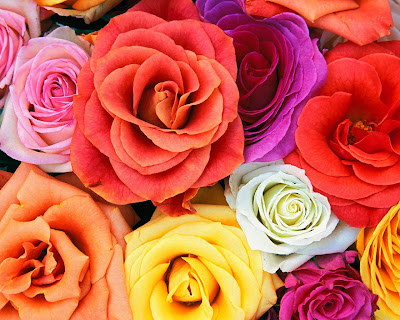
Valentine's Day is a waste of time. What do I mean? I do not mean a waste of money. I have been noticing how flower shops have been stocking up on roses galore. The other day at a hypermarket, I noticed bouquets of flowers of assorted colours on sale. Nicely packaged, complete with decorations and a card to fill in some words of intimacy and love, every bunch of roses are crying out: "Take me! Take me! She'll love me, and she'll love you even more!"

Come to think of it, will flowers really make my wife love me more?

Some of my friends tell me that their wives do not like flowers on Valentine's Day. (Bless them!) Many feel that the whole event has become too commercialized. There is no point paying good money after some ordinary flowers at 3 times the normal price.

My wife do not expect me to buy flowers for her on Valentine's Day. I told her since we got married that I will not buy flowers on Valentine's Day. It's too expensive and too much of a fad. It is also such a  meaningless activity in chasing after the flowers. One year I relented. I bought her just one rose. It symbolized my declaration of her being my only love of my life. Of course, God is always our love. I am talking about human to human.

A) A Waste of Time

What do I mean by Valentine's Day being a waste of time? Certainly, I am not brushing off St Valentine and the meaning of sharing love and passion with one's beloved. Wasting time is essentially using Matthew Kelly's phrase: 'care-free timelessness.' Imagine a guy asking a girl out on a date on Valentine's Day. Whipping out his classy iPhone 4S, he opens up the agenda:

6pm - Pick her up at her office
7pm - Arrive at the Italian Restaurant for dinner.
8pm - Dessert time
8.30pm - Pay bills and leave
9pm - Catch a romantic movie
11pm - Eat Ice-cream at a drive-in restaurant
12am - Pucker up.

In a corporate world of 'if-you-fail-to-plan-you-plan-to-fail,' it is tempting to program in a romantic schedule with such precision, as if the other party will respond exactly as planned. Mind you, your love interest or partner is not a football player that plays a game with two half-times, officiated by a time keeper. Your love interest is not supposed to stick to your plans at all costs, despite your best intentions. The date is a time for you to just enjoy the companionship and the warmth of knowing you think about and care for him/her.

Carefree timelessness is much lacking in our results-driven world. We are so used to following a schedule according to the clock. From the alarm clock in the morning to the lunch time bell, from working 9-5 at work, and relaxing 8-12 at home, our lives are regulated by the clock. Our social structures are beginning to look like people fitting into the structure rather than the structure fitting into people's lives.

I miss my childhood days where I can play with my friends without any concern about time. Together with my friends, we would kick the ball on the field, slide through the mud, throw dirt at one another, and simply have fun playing. There was no keeping track of time. There was no cares or concerns to worry about. There was only play, play, and more play. Until of course, our mothers come screaming at us to come home. Some of my friends got their ears pulled as they screamed and kicked.

Strange. When we become adults, we seemed to have lost the art of enjoying play and one another's company. We have become too driven, too focused, and too impatient to make others fit into our lives. After living in a world where we try to fit ourselves into the worldly structures of schedules, appointments, and time-sensitive work, we unwittingly expect our partners to fit into our own expectations and schedules.

No! Carefree timelessness is about being free to care without worrying about time. It is being free to let our partners be themselves. It is being free to let ourselves enjoy the time together. It is being free to 'waste" our time. Even as the clock ticks away, we learn to enjoy one another as if the battery in the clock has died. Time has frozen. The cares of the world evaporate as we become captivated in one another's eyes, and our hands in each other's grasps.

B) Free to Love

If couples can be freed from the tyranny of rushing themselves to fit the time schedules, it is truly a liberating experience. If we run by the clock, we will be constantly checking our watches. Sometimes, that can become so precise that we become guilty of mechanizing our date experience. Humans are created to be free. Why try to cage people in? Why the need to force one another to fit our schedules when we have been locked in a schedule during the day already?

The great love verse by the Apostle Paul is a reminder to us what love is all about.
"Love is patient, love is kind. It does not envy, it does not boast, it is not proud. It is not rude, it is not self-seeking, it is not easily angered, it keeps no record of wrongs. Love does not delight in evil but rejoices with the truth. It always protects, always trusts, always hopes, always perseveres." (1 Cor 13:4-7)

When we love one another, time is a tool, not a ruler. Love needs to be patient enough to wait for one another. Perhaps, each of us have different approaches to warm ourselves up to each other. Love is kind enough to let our partners be themselves, and us be our best selves during that special time together. Love does not envy other people and will refuse to do something simply because other people are doing it. Love will not boastful or prideful of how much one has done, but will boast about the merits and beauty of one's partner. Love will not be rude to the servers in the restaurants, or the traffic wardens and drivers, because one's love is not easily angered. Love is not self-seeking in trying to fit other people into our schedules. It is to allow ourselves to fit into other people's moods as much as possible to trust and to protect.


C) Love 'ALWAYS' Transcends Time

As I think about one of the late Whitney Houston's best songs, "I will always love you," it is a testimony of love being one of carefree timelessness. How can we honestly say, "I will ALWAYS love you," if we are constantly driven by the clock, by the agenda, and by our own self-interests?

Spending time with our loved ones needs to be one that is open, not closed in by an agenda. True love transcends time. True love puts the one in front of you above any agenda. True love does not rush the other. True love walks together when it is time to walk. True love talks when it is time to talk. True love enjoys the silence when it is time to be quiet. Love is enjoying beauty in all of its essence. Let me close with a quote about beauty.

 “Life is full of beauty. Notice it. Notice the bumble bee, the small child, and the smiling faces. Smell the rain, and feel the wind. Live your life to the fullest potential, and fight for your dreams.” (Ashley Smith, American author)

D) A New Agenda

The most romantic activities are often free!
Ok. For those of us who are die-hard schedulers or timekeepers, may I propose this new agenda.

6pm-12am: It's all about you, and for you, darling.

Then watch how the whole evening unfolds.

Perhaps, when we learn to appreciate nature for what nature is, people for what people are, and life for what life is, we will appreciate beauty and be able to appreciate loving one another better. For love transcends time. Love transcends our selfishness. Love transcends worldly values. May our special day for our loved ones be not constrained by time or agendas. May our love be free. May our love be free to 'waste' our time so that we can love our beloved freely and wholly.

Love well. Hey. If you need to buy that bouquet, go ahead. Perhaps, the roses will lock her in a state of 'carefree timelessness' beyond Valentine's Day, just thinking about how much you are thinking about her?


conrade

Friday, December 02, 2011

Behind Every Digital Facade is a Person

TITLE: BEHIND EVERY DIGITAL FACADE IS A PERSON
DATE: 2 Dec 2011
Written by: Conrade Yap

"So from now on we regard no one from a worldly point of view. Though we once regarded Christ in this way, we do so no longer. Therefore, if anyone is in Christ, he is a new creation; the old has gone, the new has come!" (2 Cor 5:16-17)

The world is changing. Everyone knows that. The world is changing fast. Most people know that. The world is changing us too. How many of us know that? Most importantly, in a world where people are increasingly becoming virtual, we can easily forget that behind every digital presence is a person that Christ died for. Before I get into that, let me address how the digital new has come to dominate the conventional old.

A) Changing Technological Landscape

The new has come. The old has passed away. Those who pooh-pooh away mainframes and open systems by trumpeting the rise of the PCs, are now grappling with the rise of a new tablet and smartphones era. Those who swear by Microsoft 10 years ago, are biting their tongues as they see Google sweep the search engine crown. Companies that rely heavily on traditional modes of marketing are doing catch-up to the rise of the new social network environment that is fast changing the way people do business. What is new yesterday is commodity tomorrow. What is breakthrough today will be ancient within the next few days. Social media is changing the world. More particularly, it is changing our lifestyles, and even us personally. In a changing technological landscape, we need to be on our guard, that when we try to get into the world of digital breakthroughs, we do not lose ourselves. We do not let the new technologies define who we are. It is God who defines us, not us.

Implication: It used to be man trying to make technology behave like man. Now the tide seems to be reversing. Loving God means letting God define who we are. Not technology.

A) Changing Language

We speak in a language that is also changing rapidly. A three-word 'I love you' has been replaced by a three-letter 'lol' (lots of love, in short).  A 140-word email has been outgunned by a 140-character Twitter message. What is paid subscription yesterday, is free today. Take a look at the people who are catching up on news. The elderly, the older adults read printed newspapers. Younger ones read news feeds on their smartphones, tablets, or portable computers. The old takes time to read, to enjoy, and perhaps to reflect their thoughts on what they read to their buddies sitting opposite them. The young zips through their reading by scanning, by rushing, and by quick forwarding to all their friends digitally to their buddies sitting halfway across the world. As our world becomes more digital, more Internet-driven, people becomes more virtual in their interactions, and perhaps more driven to discover the next big thing. A decade ago, there is this popular phrase: "We live in a world where it is no longer the big that eats up the small but the fast that outruns the slow." Even the venerable face of the Internet, the EMAIL, is now being threatened into extinction by Facebook and Twitter.

Implication: Loving our neighbour means learning to speak the language of our neighbours.

B) Changing Influence Mediums

With the rising popularity of the social media networks, even this phrase has changed. It is no longer the fast that outruns the slow, but the ones with the largest following, the most connected, and the most read that are marginalizing the strong, the fast, and the powerful. It is no longer a world of relationships, but a world of NETWORKS of relationships. Welcome to a viral world. It is a world where traditional boundaries of command, control, and conquer disappear. It is a world where what is private today becomes public tomorrow. It is a world in which both truths and untruths are disseminated at such an alarming scale and rate, that both are tolerated in a crucible of free speech and liberal expression.

The catchphrase used by Vegas marketers, 'What happens in Vegas stays in Vegas,' has been replaced. What happens anywhere is now distributed speedily and staying indelibly in cyberspace.  Lady Gaga and Justin Bieber are more popular (based on their follower numbers) in the social network than the most powerful President on planet earth.

Implication: Do not be distracted by the lack of followers on your Twitter or too few friends on your Facebook account. A few good friends who know you are more invaluable than thousands of faceless individuals.

C) Changing Method of Engagement

I believe that the Christian community needs to be aware of the changing climate. The new name cards are becoming less of 'telephone/fax/address/email' but more of 'Facebook-Twitter-cellphone' social media instead. While the methods and networks are changing, people are not. Though people's communications pattern may alter, their personality and basic needs are not. After all, it is one thing to grow your cow population in Farmville. It is yet another to bite into a real, beefy, juicy hamburger complete with lettuce on a sesame seed bun, tomatoes, and mayonnaise. It is one thing to silence computer speakers. It is yet another to try to keep our lit on our current emotional state. Regardless of how fast the world is changing, humanly speaking, our needs are the same. We need friends. We need hope. We need love. No amount of digital connectivity can claim to be the do-all, be-all, and become-all. Hug a computer and you will see what I mean. The warmth that you can may be due to the radiation from the computers, but that contributes nothing to emotional intimacy. The key to being intimate is in Christ.

Paul writes to the Corinthian Church, all pumped up about his new identity in Christ. It is a transformational experience too good to keep to himself. In 2 Corinthians 5, Paul tells of his hope in the heavenly kingdom. He speaks of being clothed and readied for a heavenly dwelling It is God who guarantees what is to come. This is the essence of hope, a hope in God. It is this hope that causes him to be willing to let go of the old selves, and to take on the new person, in Christ. The new has come. The old has passed away. This kind of newness can never be outlived by the digital titans of the world. Chances are, technologies will be outgunned by one another in a never ending race of being better so as to survive a little while longer. In a digital world, the stark fact is this. Stop development and your work will die. Maintain development and your work will not die so quickly. Continue innovation and perhaps your work will live a wee bit longer. The point is, the things of this world will die. They will pass away.

Implication: We live in a world where technology is rapidly outlasting itself. We are in the digital world but not OF the digital world. God will always outlast anything, even technology.

D) Behind the Digital Facade....

Not the things of God. Not Christ. Souls are of bigger concern to God. That is why Jesus came. That is why God continues to keep His Promise, His Covenant. In a digital world, this has not changed.  Behind every Twitter account is a person. Behind every Facebook address is an individual. Behind every presence on the Internet is a person that Jesus has died for. Forget about those electronic robots and spam spiders. Do not be distracted by those Internet marketing gimmicks and messages. Even behind these innovations, there is a human person just like the rest of us. Behind the digital facade, the needs have not really changed. Knowing that behind every digital facade is a person reminds us that loving our neighbour extends also to the digital platform. Technology may change fast. People do not change as fast. Technology may become obsolete. Not people. Technology may be new, but there is something that is newer every morning. It is the steadfast love of the Lord. It is the love that is newer and better than any social media network or technological brilliance. Looking with eyes of love is better than loving the eyes of technology.

May we all remember that behind every digital facade, there is a person. We may always be called to invent new technologies. We are always called to love people, both in the real world, and in the digital world. Let me close with John Ortberg's words, from his book, "Everybody's normal till you get to know them" simply because everybody is weird, one way or another. More importantly, everyone has a common need as follows:

"The yearning to attach and connect, to love and be loved, is the fiercest longing of the soul. Our need for community with people and the God who mad us is to the human spirit what food and air and water are to the human body. The need will not go away even in the face of all the weirdness." (18)

Do not just read the person's digital profile, or Facebook page. Know the person personally. Do not just twitter to the thousands of faceless individuals. Talk with people to know them more.

Turn off your computer once in a while. Have coffee with a friend. Buy lunch. Chat without your computers or phone. Be available offline as you disconnect online on a periodic basis. That way, we remind ourselves on a regular basis, that behind every digital facade is a person who needs Christ. Like us.

conrade

Monday, September 20, 2010

Renewing Discipleship in the Church

TITLE: Renewing Discipleship in the Church
Written by: Conrade Yap
Date: 20 Sep 2010

'Discipleship' is something many talk about, but few people have any idea what this means. Some will scratch their head to define discipleship. Others will be clueless when it comes to leading others toward deeper discipleship. Discipleship is simply put, growing deep in Christ, following Christ. Some likes to call it as knowing Christ, and making Christ known. I think one of the first steps in any discipleship program is simple: Friendship. When Jesus calls his disciples friends, he is showing a clue in discipling one another.

"I no longer call you servants, because a servant does not know his master’s business. Instead, I have called you friends, for everything that I learned from my Father I have made known to you. " (John 15:15)
Too often, we approach discipleship like a program. That is wrong. We need to approach discipleship on the basis of relationships, in particular friendship.

Yesterday, I stood with a small group of men as we start to publicize the upcoming Men's Fellowship programs to be conducted every 1st and 3rd Thursdays each month beginning next October. Each of the leaders take turn to share poignant parts of the program. The first talk about what we will be doing. The second share about the people will be facilitating the course. I share about the schedule. There is nothing very theological or intellectual about the sharing. It is pure and simple an invitation to meet. We want to provide an opportunity for men in the Church to come together, to meet as they are and to learn together as a band of brothers. More than that, I think it is a chance to foster a brand of friendship that men can identify with. I think in any discipleship within the Church, building networks of friendship is one of the most unintrusive ways. We may not be comfortable with programming per se. We may not see eye to eye with regards to what kinds of topics we will be discussing. However, the moment we are able to see each other not as objects to be worked on, but as people to share our lives together with, we are well on our way to developing spiritual friendship.

Spiritual friends are important. I learn it first-hand as I mourn the loss of my father. Friends and family members alike walk with me. They talk and they pray with me. They eat with me. These are simple ordinary tasks that anybody can do. The only requirement is time. I suppose time is one of the greatest gifts we can offer to each other. Sometimes I feel the phrase "we are all very busy people," has become overused. It is becoming to me an irritating cliche that I prefer to avoid using. Thus I share Marva Dawn's response to busyness with the following retort.

"The practices by which we might become more thoroughly engaged in our focal concerns of loving God and the neighbors instead of coveting persons and what or who attends them again include gratitude, contentment, rejoicing, and weeping. With people, we might extend those with the additional practices of friendship, hospitality, and solidarity." (Marva Dawn, Unfettered Hope, Kentucky: Westminster John Knox Press, 2003, p178)

Coveting vs Focal Concerns
 I think Dawn helpfully makes a clear distinction between 'focal concerns' and 'coveting.' In fact, our modern brand of busyness appears more to be another form of 'coveting' rather than 'focal concerns' about loving God and neighbour. For instance, we say we have no time to meet up. What are we actually doing with that time? Are we piling up chores upon chores, activities upon activities that are simply another race to the finish with our neighbours? Are we rat-racing with our neighbours or are we loving our neighbour? Are we running circles around our selfish tracks or are we allowing ourselves to walk with friends through their ups and downs of life?

I have heard far too many stories of people who regret spending too much time in their office instead of their home. One example is author and speaker John O'Neil. In "The Paradox of Success," O'Neil shares how he was rocked into reality about the way he has managed his high flying career over his family matters. After his first marriage collapsed, he realized that he is living the paradox of success. He might have been a successful executive flying and living a life of high influence and affluence. Unfortunately, the cost of such success is painful. Fortunately, he recovered well to salvage whatever remains in his family relationships.

I think the biblical commandment against coveting is so applicable in our busy lives that we need to ask ourselves the question again.

ARE WE COVETING or are we living our focal concerns as Christians? The clue is in terms of how we are giving more than we are receiving. Ever wonder how Jesus is able to do more despite having only 3 years of ministry? One reason is because he observes people. He notices how people are needy and he carefully makes himself available to those who needs him, and stays away from the people of influence and power. He spends his time with the poor, the lame and the marginalized in society. Ever wonder who were the people who mistreated and persecuted him? They are the people in power. The religious leaders, the political rulers and the military regime, whose soldiers hurt him.

When we say that we are busy, be careful. Ask ourselves first: Are we coveting or are we putting our resources toward our focal concerns of life? May I suggest that when we are in doubt, come together. When we are not sure whether we are coveting or doing the will of God, gather with fellow believers to pray, to study and to discern together our life goals. After all, meeting up once or twice a month may not be a lot. Unless of course, we are coveting our own time to pursue our goals for the benefit of self and self alone.

Renewing Discipleship Via Friendship
Come and renew our commitment to discipleship. Come and refresh one another's friendships. Meet together. Pray together and let us enjoy the remaining years of our lives, to sharpen one another's focal concerns. When this happens, our desire to covet will grow strangely less and our ability to focus on the important will grow brighter and clearer each day. Thanks to the simple availability of open friendship. This is the first step to renewing discipleship in the Church.

Remember. True discipleship is not a program. It is the cultivation of relationships. Let us take a leaf from the wisdom of Robert Coleman.
"Better to give a year or so to one or two men who learn what it means to conquer for Christ than to spend a lifetime with a congregation just keeping the program going."

Ditto.

conrade

Wednesday, April 21, 2010

Heart-Warming Story of a Lion

This is a very heart-warming story of a lion named Christian. We need friends. Friends need us. Why not get in touch with someone you have known long ago, to simply say 'Hi.'The message at the ending reads as:

"Love knows no limits and true friendships last a lifetime. Get back in touch with someone today."

Thanks Albert for this.


conrade

Monday, April 19, 2010

Why Did the Geese Cross the Street?


This picture warms my heart. On Sunday after church, at a busy Overland Park street in Kansas, Rene, the wife of my friend, Phillip saw a family of geese struggling to cross the street. Out of a warm and compassionate heart, she got off the car, stopped traffic and motioned the gander family to cross the road safely. My mind was thinking. Over here in Vancouver, especially the West side, it is common practice to stop our cars to let pedestrians cross the street. This is laid-back West coast lifestyle.

My head was musing. Wow. Her kindness and care for people, extends to animals as well.  How many people would have bothered to show such tender care to geese? Uncommon kindness indeed. Well done, Phillip and Rene.

conrade

Latest Posts

Headlines