Showing posts with label Books. Show all posts

Monday, October 30, 2017

BookPastor >> "The Reformation" (Stephen J. Nichols)

TITLE: The Reformation: How a Monk and a Mallet Changed the World
AUTHOR: Stephen J. Nichols
PUBLISHER: Wheaton, IL: Crossway Books, 2007, (160 pages).

Most people remember the last day of October as the night to celebrate Halloween. It is a popular event where people wear costumes and kids dress up in cute attire out of fun. Going around trick-or-treating has become an accepted way of soliciting free candies and chocolates from neighbourhoods. Unfortunately, this "All Hallows' Eve" event has overshadowed a more significant event in Church history: The Reformation.

On October 31st, 1517, Martin Luther alone challenged the Roman Church establishment by nailing 95 theses on the door of Wittenberg. He was essentially forcing the Roman Church leaders to a theological debate, something that Luther had spent years analyzing, studying, and being convicted about. That day is now referred to as Reformation Day.

This book gives a very good overview of the effects of that day. It gives:

  1. Reasons why the Reformation still matters today.
  2. How Luther Inspired the German and Lutheran Reformation
  3. How Ulrich Zwingli Led the Swiss Reformation
  4. How the Anabaptists Rise Up 
  5. The Influence of John Calvin
  6. The Anglican Movement and the British Reformation
  7. The Puritans
  8. Others...
It is a delightful read, with lots of historical background of Luther and others, plus a list of powerful words from the reformation leaders. Nichols has also conveniently placed a list of texts, confessions, catechisms, prayers of the Reformation toward the end of the book. I must say, the Reformation is more worth celebrating. Dr. Stephen J. Nichols is president of Reformation Bible College, chief academic officer for Ligonier Ministries, and a Ligonier teaching fellow. 

More information can be obtained at www.monkandmallet.com

Monday, May 08, 2017

BookPastor >> "Reading for the Common Good" (C. Christopher Smith)

This review was first published at Panorama of a Book Saint on Sep 15th, 2016.

c


TITLE: Reading for the Common Good: How Books Help Our Churches and Neighborhoods Flourish
AUTHOR: C. Christopher Smith
PUBLISHER: Downers Grove, IL: IVP Books, 2016, (179 pages).

What has reading got to do with community? A lot! So says the author and editor of The Englewood Review of Books, Christopher Smith. This co-author of Slow Church continues on the tread of learning to pace ourselves in our reading and our connecting. While his previous bestselling book was on things Church and community, this book is about the general practice of reading and books and how they can cultivate neighbourliness. Smith uses the Church as a "learning organization" as a way to enter the discussion. From reading about DIY manuals to instructions about things essential for daily living, reading can be opportunities to build bridges and to share knowledge of things that matter to our community. For reading is both learning and action. Both must be held together. Learning without action is mere knowledge that does not relate to everyday life. Action without learning will have their superficiality eventually found out. Smith lists the other reasons on how reading can be used for the common good:
  • It forms us into a compassionate and faithful people who build bridges;
  • It calls us to know God in His Word;
  • It guides us to understand the brokenness of the world and how we can be a positive force for good;
  •  It helps us discern and develop our gifts and talents.

Monday, January 23, 2017

BookPastor >> "Organic Outreach for Churches" (Kevin G. Harney)

This review was first published at Panorama of a Book Saint on Feb 15th, 2012.

conrade


TITLE: Organic Outreach for Churches: Infusing Evangelistic Passion into Your Congregation
AUTHOR: Kevin G. Harney
PUBLISHER: Grand Rapids, MI: Zondervan, 2011, (196 pages).

In a clever play on the word 'organic,' Harney is able to compare and contrast what true evangelistic passions means. It is not simply a job delegated to groups that label themselves evangelistic committees or mission teams. Neither is it just sending money or promising prayers to a distant community of need. Those are essentially add-ons, or artificial supplements, or inorganically modified methods of outreach. In a nutshell, organic outreach is about infusing evangelistic passion in all ministries beginning with the leadership in any Christian organization. The need to obey the Great Commission needs to occur at every level, every domain, and in every heart of anyone who calls himself or herself a disciple of Christ. Harney writes passionately:

"The only way outreach will become a natural part of a congregation's life is when every leader and each ministry are gripped by a commitment to fulfill the Great Commission." (13)

Written in four parts, Harney aims to infuse such evangelistic fervour beginning with the HEART of the congregation. He then progresses to the MIND of the congregation by adopting 7 'simple mind shifts' and 6 'levels of influence' to mobilize the whole church.  Part Three is about the doing aspect through the HANDS of the congregation where one can utilize present inherent strengths as well as innovative approaches. Part Four provides tips and ideas about MOUTH that speaks for Christ through vibrant testimonies. To avoid being accused of mere theory only, Harney conscientiously field-tests his ideas with his local church, and 11 other ministry settings, with personal accountability groups. Moreover, this book was not written first. It comes 5 years later after numerous conference discussions and encouragement from friends and acquaintances.


Wednesday, October 26, 2016

Midweek Meditation: "The Second Circle-Pray Hard" (Mark Batterson)

Following last week's first circle, we move to the second circle of Batterson's exhortation: Pray Hard.

"The parable of the persistent widow is one of the most pixilated pictures of prayer in Scripture. It shows us what praying hard looks like: knocking until your knuckles are raw, crying out until your voice is lost, pleading through until your teats run dry. Praying hard is praying through. And if you pray through, God will come through. But it will be God's will, God's way.

The phrase used to describe the widow's persistence, 'she is wearing me out,' is boxing terminology. Praying hard is going twelve rounds with God. A heavyweight prayer bout with God Almighty can be excruciating and exhausting, but that is how the greatest prayer victories are won. Praying hard is more than words; it's blood, sweat, and tears. Praying hard is two-dimensional: praying like it depends on God, and working like it depends on you. It's praying until God answers, no matter how long it takes. It's doing whatever it takes to show God you're serious.

Desperate times call for desperate measures, and there is no more desperate act than praying hard. There comes a moment when you need to throw caution to the wind and draw a circle in the sand. There comes a moment when you need to defy protocol, drop to your knees, and pray for the impossible. There comes a moment when you need to muster every ounce of faith you have and call down rain from heaven. For the persistent widow, this was that moment.

While we don't know what injustice took place, we do know that the persistent widow wouldn't take no for an answer. That's what made her a circle maker."

(Mark Batterson, The Circle Maker, Zondervan, 2011, p81-82)

Wednesday, October 19, 2016

Midweek Meditation: "The First Circle - Dream Big" (Mark Batterson)

Following the introduction last week, we move to the first circle of Batterson's exhortation: Dream Big.

"Drawing prayer circles often feels foolish. And the bigger the circle you draw the more foolish you'll feel. But if you aren't willing to step out of the boat, you'll never walk on water. If you aren't willing to circle the city, the wall will never fall. And if you aren't willing to follow the star, you'll miss out on the greatest adventure of your life.

In order to experience a miracle, you have to take a risk. And one of the most difficult types of risk to take is risking your reputation. Honi already had a reputation as a rainmaker, but he was willing to risk his reputation by praying for rain one more time. Honi took the risk - and the rest is history.

The greatest chapters in history always begin with risk, and the same is true with the chapters of your life. If you're unwilling to risk your reputation, you'll never build the boat like Noah or get out of the boat like Peter. You cannot build God's reputation if you aren't willing to risk yours. There comes a moment when you need to make the call or make the move. Circle makers are risk takers. 

Moses had learned this lesson well: If you don't take the risk, you forfeit the miracle."

(Mark Batterson, The Circle Maker, Zondervan, 2011, p46)

Wednesday, October 12, 2016

Midweek Meditation: "The Circle Maker"

In the book, The Circle Maker, Mark Batterson shows us the way to pray without ceasing. Using the circling metaphor, he seeks to encourage us to circle ourselves with prayer, constant prayer. Based on the first-century Jewish sage, Honi, whose faith was expressed in fervent prayer, he describes three types of circles. For the next five weeks, we will be dealing with the topic of prayer according to the Circle Maker.

"God has determined that certain expressions of His power will only be exercised in response to prayer. Simply put, God won't do it unless you pray for it. We have not because we ask not, or maybe I should say, we have not because we circle not. The greatest tragedy in life is the prayers that go unanswered because they go unasked.

Now here's the good news: If you do pray, all bets are off. You can live with holy anticipation because you never know how or when or where God is going to answer, but I promise you this: He will answer. And His answers are not limited by your requests. We pray out of our ignorance, but God answers out of His omniscience. We pray out of our impotence, but God answers out of His omnipotence. God has the ability to answer the prayers we should have prayed but lacked the knowledge or ability to even ask." (Mark Batterson, The Circle Maker, Zondervan, 2011, p16-7)

Friday, July 24, 2015

Amazon Top 1000 Reviewer List (#989)

Wow! I made it to Amazon's Top 1000 Review list today. Never thought I'd get this far.


conrade

Monday, March 16, 2015

BookPastor >> "Scripture By Heart" (Joshua KANG)

Title: Scripture by Heart: Devotional Practices for Memorizing God's Word
Author: Joshua ChoonMing KANG
Publisher: Downers Grove, IL: IVP Press, 2010, (150 pages)

This book is an easy read, but involves some effort in order to practice it. It invites the reader to begin an age old practice: Memorizing Scripture. The book was first written in Korean. Now translated in the form of 30 short chapters, the author gently guides the reader to begin the long journey of what he calls the 'memorization divina.' Just as the 'lectio divina' implies a slow and intentional reading, the memorization divina implies a perseverance that over time, in short sound bites.

WHY YOU SHOULD READ THIS BOOK
The author provides 4 reasons for memorizing the Word.

1) For Knowing God;
2) For Imitating Christ;
3) For Worshiping God;
4) For Fulfilling the Will of God.

I will add that the reasons for memorizing God's word is basically for loving God. How I love thy Word, says the Psalmist. Ps 119 alone should motivate us to put the Word of God in our hearts. For this reason alone, you should read this book and learn some memorization skills. This book can also be used as a companion to Spiritual Formation.

BOOK STRUCTURE

The structure of the book is by itself a representation of the book's philosophy. The 30 chapters may seem long (like the Bible is with many books and chapters), the brevity of each chapter shows us the need to pace oneself in the memorization process. The author is deeply aware of the difficulties and pitfalls of such a massive effort to remember Scripture. Thus, he guides te reader with reminders of the 'sweetness' of the effort, and to encourage one toward persevering toward the very end. The practical ideas are distributed throughout the book.

QUOTES I LIKE:
  • We begin memorizing Scripture by taking small steps, then expanding gradually to larger steps. Be patient with yourself, especially whenever you’re tempted to memorize Leviticus in an hour and a half!” (23)
  • A healthy spirituality sends deep roots into a cultivated mind; knowledge is essential to spiritual development. We feel and act upon knowledge because our thoughts affect our feelings. The mind also influences the will because our choices depend on our knowledge.” (32)
  • "A cultivated mind produces more insight, possesses a richer sense of the world and enjoys a more attractive experience of reality. Our minds are influenced by what comes from outside of us. We cannot create our own world, and yet we can create our own worldview. The abundance and vitality of the world we live in depends on how we see it. When our minds are cultivated by the Word of God through Scripture memorization, we can see the world that was created by God in the way that God sees it.” (33)
  • one of the most enjoyable spiritual pastimes is drawing a Scripture verse from memory and meditating on it. Often meditation is a joy of its own, but gaining wisdom while doing so leads to ecstasy.” (34)
  • "Emotion follows motion." (24)

MY COMMENTS
I am intrigued by Kang's description of how some people who attended his seminar on Memorizing Scripture have their interest fizzle out within the first few minutes of his talk. These are the people who perhaps thought that the seminar contains some quick-fix easy to use formula for Bible memorization. Unfortunately, even if such a formula exist, it may enter the head but hardly influence the heart. Kang makes a good observation saying that:

it must be remembered that digesting the word is more important than ingesting it; food itself is of no use until it’s converted into energy.” (18)

Right on. We need to make a distinction between 'ingesting' the word vs 'digesting' the Word. The former involves wholesale swallowing; the latter requires bite-size chewing. The former gobbles quickly; the latter nibbles intentionally. Ingesting focuses on the speed of the memorizing process while digesting requires a concerted effort of the whole person. In other words, ingesting is for spiritual formulation whereas digesting is for spiritual formation. Having done Bible memorization, I find myself agreeing with a lot of what Kang is saying. In fact, one of the rewards of Bible memory is to be able to meditate on it when the lights are turned off before I go to bed.

I recommend this book highly not only for meditation purposes, but for loving God more through intentional spiritual formation. You can purchase the book by clicking here.

conrade
[first published at SabbathWalk at http://www.sabbathwalk.org/Home/book-reviews/review-scripture-by-heart]

Wednesday, January 07, 2015

Midweek Meditation: Emotional/Spiritual Health Inventory (1)

Starting this week and for the next 7 weeks, I will be posting snippets of an inventory list to help us note our personal emotional/spiritual health. The lists are adapted and where necessary, paraphrased from Peter Scazzero's "The Emotionally Healthy Church."


THINKING ABOUT OUR OWN DISCIPLESHIP (1-Very / 2-Sometimes / 3-Not Sure / 4-Never)
  1. How certain are you with regards to being a child of God? (  )
  2. Are you able to worship God on your own? (  )
  3. Do you do your Quiet Time regularly? (  )
  4. Do you know your spiritual gifts and actively use them? (  )
  5. Are you certain that your gifts, talents and possessions are God's providence and all belong to God? (  )
  6. Are you participating actively with other believers in your community? (  )
  7. Are you living as a 24x7 Christian? (  )
Note that the lower your score, the closer you are to a good discipleship model.

Monday, November 03, 2014

BookPastor >> "Rising Above a Toxic Workplace" (Gary Chapman, Paul White, and Harold Myra)

If there is one word to improve any work culture and relationships in the workplace, it is summarized in one word: "Appreciation." This review was first published on August 12th, 2014 at Panorama of a Book Saint. 

conrade

TITLE: Rising Above a Toxic Workplace: Taking Care of Yourself in an Unhealthy Environment
AUTHOR: Gary Chapman, Paul White, and Harold Myra
PUBLISHER: Chicago, IL: Northfield Publishing, 2014, (160 pages).

Ever encountered the boss from hell? What about irritating colleagues who absolutely ruin our day? Maybe, there is a negativity so heavy that going to the workplace no longer seems fun or exciting anymore. The fact is, there are many places that have a toxic environment that can discourage and turn off ordinary workers from discharging their best. According to a Gallup poll, seven in ten people work in toxic workplaces. A bad workplace also leads to stress and reduced productivity. Class tensions create divisions within organizations.

Then there is the toxic boss from hell. They cannot take no for an answer. Not only that, they can make life miserable for subordinates who are desperate to keep their job. Some bosses are so abusive that standing up to them may very well be worse off. Greed and envy are the toxic fumes in any workplace. Even those companies that shot to fame based on their ranking in "Best companies to work for" are not immune from toxic workplaces. For what is wonderful for now is no guarantee of the future.

Monday, September 15, 2014

BookPastor >> "When Sorry Isn't Enough"

An apology is more than saying "sorry." It goes much farther than that. Popular author Gary Chapman and Jennifer Thomas show us at least 5 ways to do it. 

This review was first published on May 30th, 2014 at Panorama of a Book Saint. 

conrade

TITLE: When Sorry Isn't Enough: Making Things Right with Those You Love
AUTHOR: Gary Chapman and Jennifer Thomas
PUBLISHER: Chicago, IL: Northfield Publishing, 2013, (176 pages).

No one's perfect. Neither should we behave in such a way as if we expect people to be perfect. Yet, that happens all the time. Even the best of relationships will fall into bad and difficult times, especially when one's loved one is hurt. What if the offense is repeated? What if the expectation is more than a mere apology? Then what should we do?

Previously released under the title, "The Five Love Languages of Apology," Chapman understands the intricate connections needed for going beyond mere sorry. When authentic apology meets understanding among all, we have genuine forgiveness. The authors assert that because "people are incurably moral," not only do they seek to do right, they are inclined to try righting any wrongs. The key is to learn how to do that. The five types of apology are as follows:

  1. "I'm Sorry" - expressing regret
  2. "I was wrong" - accepting responsibility
  3. "How can I make it right?" - Making restitution
  4. "I want to change" - Genuine repentance
  5. "Can you find it in your heart?" - requesting forgiveness.

Monday, August 25, 2014

BookPastor >> "Planted" (Leah Kostamo)

This review was first published at Panorama of a Book Saint on April 14th, 2014. It is one of the best books I have read this year. 

conrade


TITLE: Planted: A Story of Creation, Calling, and Community
AUTHOR: Leah Kostamo
PUBLISHER: Eugene, OR: Cascade Books, 2013, (172 pages).

This is a beautiful book. Few books have managed to capture the essence of nature, the joys of community, and the affirmation of a simple calling like this one. Leah Kostamo, a wife, a former campus ministry worker, as well as a co-founder of the A Rocha ministry based in BC Canada, has shown us how good stories can be told with simplicity, with insight, and with humour. Combining her love for creation and conservation, her natural talent for observing details in ordinary things, her passion for community building, coupled with her eloquent use of words, this book is destined for greatness in the literary world. As a memoir, readers will be humbled at how the author and her husband Markku would give up lucrative careers, sell their house, and to pour all their assets into a non-profit ministry without guarantee that it would even survive its initial years. Yet, it did and it did so marvelously, blessing, teaching, and enabling thousands of visitors and volunteers at their farm facility. The ministry in Canada began as a seed back in 1996 at a Regent College course entitled, "Incarnational Mission" led by Peter and Miranda Harris, who had founded A Rocha in Portugal. Eight years later, the idea took root, and sprouted trunks and branches through personal investments as well as generous givers and loaners by those who expressed faith enough to walk with the Kostamos.

The book is also a mini-ecological guide. We learn about the threats of worldwide extinction of 13% of birds, 25% of mammals, and 41% of amphibians. We see how a tiny shrimp plays its microscopic role in a complex and delicate ecological environment, that benefits beavers, bears, and big trees. We read about invasive species, weeds, the birds, and even slugs. Along the way, Kostamo makes sure we do not get carried away in the natural world and forget about the technological world. With a deft touch of humour, she compares and contrasts pods of orcas with iPods! It can also be used as a primer in becoming more nature aware. We are encouraged to think about the tap water we have, to think about its source, its distribution channels, and all the resources poured into the whole system. We are challenged to think about the gardens, how the seasons impact life, the variety of birds and nature around us, and even rocks and minerals that seem so mundane for the busy individual.

It is also a guide for a deeper awareness of what eating entails. For those of us whose limited vocabulary of eating centered around restaurants, the food on our tables, or the kitchen, we get invited into a world of farming, of growing our own food, and the beauty of real food over processed stuff. Food is not just something to be consumed, but it can incorporate a work of art in itself. Beyond the feasting, we will appreciate the preparation beyond mere cook books, and to be respectful in the way we partake of God's providence for us. Slowly but surely, the book becomes a rallying point in the practice of Micah 6:8, that we learn to live justly, love mercy, and to walk humbly. Very aptly, the book closes with a relook at the biblical Sabbath, reminding us that working hard and doing good have their limits. Man can only do so much. Everything else totally depends on God alone. The keeping of the Sabbath is a powerful reminder that we by ourselves are limited. That is why Sabbath keeping enables us to be natural ourselves one day a week, as we busy ourselves with nature on the other six days.

This book is a rare find. More accurately, the book found me. When contacted to do this review, I promptly agreed because of curiosity in part, and to support a fellow Regent alum as well. Little did I know that I would be receiving a literary gem, a unique seed that germinates in me a greater appreciation of nature and creation. Most of all, I am humbled by how the Kostamos' passion-turned-reality have blessed people of all ages from all walks of life. There is a lot of material in this humble looking book. Open it up at any one page and you can easily find a point or two to learn from and to contemplate after.

I am full of praise of the quality of this book. I particularly appreciate the three points to show us the way forward, namely; 1) Practice Gratitude; 2) Practice Generosity; and 3) Practice the Sabbath Keeping. On all three counts, I say a hearty Amen! A clear best of the best so far in my 2014 stack of books.

Thank you, Leah Kostamo for letting me know that this book even existed.

Rating: 5 stars of 5.

conrade

This book is provided to me courtesy of the author in exchange for an honest review. All opinions offered above are mine unless otherwise stated or implied.

Monday, August 18, 2014

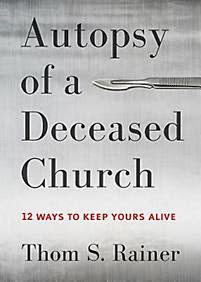
BookPastor >> "Autopsy of a Deceased Church" (Thom S. Rainer)

The title of the book may sound a little gruesome, but the message is essentially one of saving the church before it is too late. Learn so that one does not fall into the potholes others have fallen into. This review was first published on May 21st, 2014 at Panorama of a Book Saint. 

conrade

TITLE: Autopsy of a Deceased Church: 12 Ways to Keep Yours Alive
AUTHOR: Thom S. Rainer
PUBLISHER: Nashville, TN: B and H Publishing, 2014, (102 pages).

Spurred by the popularity of his blog post of the same title, the author and President of Lifeway Christian Resources in Nashville, Tennessee has put together a whole book on church autopsy.

Gruesome? Not really. For the churches Rainer are talking about are already dead in the first place. Like a Church version of CSI, examining the evidence of the deceased church will bring hope and life to existing ones, especially those that are exhibiting all the marks of a dying church. In doing so, Rainer has helpfully identified 11 marks of a dying church and 12 ways to go about reversing the seemingly inevitable with 12 ways that say: "Not so fast."

The stories in the book are real, although masked in order to protect the real persons. The author based his research on 14 deceased churches. Deceased churches can possess one or more of the following 11 factors:
  1. Lost her vision
  2. Gradual erosion that members fail to see
  3. Over-clinging to the past
  4. Me-First mentality
  5. Inward-Looking Budgets
  6. Great Omission
  7. Personal Preferences Driven
  8. Frequent Pastoral Turnovers
  9. Poor Prayer Attendance
  10. No Clear Purpose
  11. Obsession with Facilities

Monday, July 28, 2014

BookPastor >> "The Underestimated Gospel"

This review was first published at Panorama of a Book Saint on June 3rd, 2014. 


conrade

TITLE: The Underestimated Gospel
AUTHOR: Jonathan Leeman (editor)
PUBLISHER: Chicago, IL: B&H Publishers, 2014, (224 pages).

There has been much division through the centuries. Churches have split up in many different ways. History has not been kind to the Church. This is especially so when the gospel has been undermined, under-emphasized, and underestimated.   For the gospel is one that is able to bring people together in the truth, to be like what Paul writes in Philippians 2:2 to "make my joy complete by being like-minded, having the same love, being one in spirit and purpose."

Under the umbrella of T4G (Together for the Gospel), Leeman gives readers a flashback on the First Great Revival during the time of Whitefield in North America, and to affirm that though the time is different, the longing for revival remains the same. Originally presented as papers at a pastor's conference of the same title in 2012, the essays have been re-edited for the reader instead of hearers. It is the underlying conviction that the gospel is more than mere words. It is power that comes forth from the faithful preaching of the gospel. It is power that transform people. It is power that empowers the Church to do the work of God. It is the power of the gospel that encourages pastors and ministry leaders. It is the power of God that is made manifest through the gospel. Unfortunately, for many people in many parts of the world, this very gospel of power has been underestimated. This book seeks to bring back our awareness of the power that lies within the proclamation of the gospel.

Monday, April 21, 2014

BookPastor >> "Alive!" (J. Warner Wallace)

TITLE: Alive: A Cold-Case Approach to the Resurrection
AUTHOR: J. Warner Wallace
PUBLISHER: Colorado Springs, CO: David C. Cook Publishers, 2014, (22 pages).

Christ is risen! Christ is risen indeed!

The world all over celebrates and remembers the resurrection of Christ. With Easter Sunday yesterday, millions of Christians around the world celebrated the great occasion of faith, of joy, and of hope. Yet, there are skeptics who refuse to accept the validity of the Resurrection of Christ. There are also many who point to the lack of evidence to support Christ's resurrection claims. This book is one book that attempts to take a "cold-case approach" to investigate the resurrection claims like a detective. Written by a former investigator well trained in the technical field of "death-scene investigation," he begins by pointing out the cold facts of any murder scene. Gradually, he proceeds to the ancient story of how Jesus was killed and highlights four "minimal facts" that both "friends and foes of Christianity" will agree upon.

  1. Jesus died on the cross and was buried
  2. Jesus' tomb was empty, and no one ever produced his body
  3. Jesus' disciples believed that they saw Jesus resurrected from the dead
  4. Jesus' disciples were transformed following their alleged resurrection observations
The rest of the book looks at the different objections made my skeptics.

Accusation #1 - The disciples were wrong about Jesus' death

  • How then do we explain the actual pulling of Jesus from the cross and the witnesses then of Jesus' death?
  • The mixture of blood and water that poured out of Jesus' body when pierced is a scientific evidence of a dead body. A living body will only have blood.
  • Roman guards face serious consequences if they allow a living person to be removed from the cross
  • and others.
Accusation #2 - The disciples lied about the resurrection
  • How do we explain the many other witnesses who can testify the resurrection of Christ?
  • Jewish authorities were thorough about making sure no one can steal the body of Christ
  • Disciples lacked motive to lie.
Accusation #3 - The disciples were delusional
  • Why then the empty tomb?
  • Are large groups of people capable of hallucinations together?
  • Why the absence of the body?
  • People like Thomas were skeptical, but he too finally believed.
 Accusation #4 - The disciples were fooled by an imposter
  • It will take someone who is closer to Jesus than the disciples to pull off such a stint
  • Impersonator would need miraculous powers to continue tricking the disciples
  • Does not account for missing body
Accusation #5 - The disciples were influenced by limited spiritual sightings

  • How to explain the many sightings by hundreds of people?
  • What about the missing body and the empty tomb?
 Accusation #6 - The disciples' observations were distorted later

  • The earliest activities of the disciples is centered on the resurrection of Christ. The "later" argument thus contradicts the evidence
  • The testimony of the disciples were based on the resurrection
Using the system of abductive reasoning, Wallace finally moves toward concluding that Jesus has risen. The accusations hold no water as they seem more incredible than to trust the resurrection of Christ. If you are looking for a quick study and arguments to support the resurrection of Christ, this book will be a fine read.

conrade


Tuesday, April 15, 2014

Movie Review: Heaven is For Real

I watched a preview of this movie, courtesy of Outreach Canada last month.While I had initial reservations about the story itself, when it comes to actually portraying the book, the film does very well. My review will not be on whether it is theologically right or not, or whether I agree with all of the interpretations made in the movie. My review will be based on how inspiring the whole movie is, and in terms of how wholesome it is for family viewing. (Website resources here)

Before I proceed, let me simply summarize the story as one of a three year old boy named Colton Burpo who had a near death experience, following an emergency surgery. For that brief moment, no one except Colton himself had an afterlife experience in heaven. He saw Jesus. He saw his grandpa. He even had his sister in heaven give him a hug. All of these events were never told to him while on earth. In that brief trip to heaven, Colton was able to learn about it all, and to share the incredible details on earth. What followed was an amazing string of revelations and inspirations that not only amazed people, it threw people into a whirlwinds of faith and doubt; trust and suspicions.

Let me provide five thoughts about the whole movie.

1) Quality: A Very Well-Made Film

Gone are the days where Christian movies tend to be seen as "woody" or non-professional enough for the mainstream. The quality of Christian films has generally improved. This movie takes it a leap further. With powerful acting and well-known names in Hollywood, backed by a reputed Sony Pictures brand-name, this movie has ushered Christian movie-making into a very respectable realm. With Academy Award® nominee and Emmy® award winning actor Greg Kinnear as Todd Burpo and Kelly Reilly as Sonja Burpo, the quality of acting exceeds many Christian movies previously made.  You can read more about the cast and details here.Even the acting by little Connor Corum as Colton Burpo is superb.

2) Empathy: It Asks Many Common Questions on Behalf of the Audience

There is a sense that the producers of the movie have adopted the position of a skeptic as they film the movie. With Todd Burpo as the pastor, volunteer fireman, husband and father constantly questioning and battling his own doubts, Burpo tackles the common doubts on behalf of the audience. It is clear that the producers were trying to see the whole movie from a skeptical and questioing audience point of view. Is it really true? Can we truly believe Colton's story? What if it is all a fake? Is heaven really for real?

Having the father agonize and struggle through it all gives a sense of authenticity in the search for truth. This is something I appreciate, as the movie really puts itself in the shoes of the audience and asks many of the commonly anticipated questions on our behalf. Kudos to the producers!

3) Speed: A Good Pace

The story began gradually and did not immediately go into the heavenly experience. I noticed that the producers took pains to draw up the contexts of the whole family situation. There was the duty of a father who has preaching responsibilities at Church; an important volunteer firefighter member of the small community; a charitable man often providing service without expecting cash but whatever others could pay in kind. Once Colton had that heavenly experience, the revelation came in small steps. Each time the revelation was shown, audiences could feel how it hits home. The pace allowed doubts and questions to be lingering rather than smothered with less than satisfactory answers. This is important as the movie is not there to convince people whether there is a heaven or not. Instead, it is trying to portray as accurately as possible, the Burpos' perspectives. With such a controversial subject, it is wise to pace accordingly.

4) Inviting Not Imposing

Unlike evangelistic movies, this movie invited audiences to think and to question, rather than to impose answers. That is movie making at its best. In fact, such a approach will appeal to a larger audience, both Christians as well as non-Christians. Churches or Christians trying to reach out to their friends, ought not to oversell the message. Invitation is best. Let the movie do all the questioning and the talking. After the movie, we can do all the discussing without having to fear not having all the right answers. Let the movie raise the topic of heaven and to open up conversational moments for everyone. 

5) Inspiring

Overall, the story was an inspirational one. None of us will be able to prove beyond any doubt whether the burpos' stories are true or not. It can only be as true as their claims. If we can put aside skepticism, objections, or any forms of negative feelings toward the entire Burpo experience, and to just enjoy the movie as it is, the end result is an inspiring and meaningful one. After all, as Christians, we believe there is a heaven. If this movie can at least demonstrate that there are glimpses of heaven in everyday life, it may enable us to be more watchful for heaven while on earth. Watch the trailer here.


Rating: 5 out of 5.

conrade


Monday, December 23, 2013

BookPastor >> "In Search of the Real Spirit of Christmas" (Dan Schaeffer)

TITLE: In Search of the Real Spirit of Christmas
AUTHOR: Dan Schaeffer
PUBLISHER: Grand Rapids, MI: Discovery House Publishers, 2003, (208 pages).

What is the Christmas Spirit? Is it about giving presents or seeing the sign of Santa and reindeers? What about decorating Christmas trees and the food around the dinner table? Is that what Christmas is all about? Intrigued with all the big shopping frenzy and the numerous arguments back and forth about the religious significance of this annual day, author and pastor Dan Schaeffer helps us to reflect more meaningfully on the different symbols and purposes of Christmas. At the heart of the book is the conviction that without a real sense of Christmas and what it is all about, we will all be impoverished year on year, going through the motions of trying to make Christmas meaningful, but regretfully always falling short. Any fun-filled expectation seems busy on the outside but empty on the inside. Even Christians are not immune. In the search for the real Spirit of Christmas, Schaeffer has the following to say:
  • We should not just read about the story of Christmas. We ought to "put ourselves" into it.
  • Learn to imagine how Jesus laid in the dirty manger while our modern babies are delivered in a posh and modern hospitals;
  • Think of the humble and simple way Jesus was born, and compare it to the huge medical facilities we enjoy.
  • As we remember the nativity image, think of what it all means.
  • Christmas is not so much our search for God, but God's search for us!
  • Christmas is not just for friends or family. It is for all, just like Christ came for the whole world.
  • Think about the Christmas gifts and the persons behind the gift. Compare the giving to the way God gives us Jesus.
  • If Jesus is coming to our modern city and lifestyle, how would he be treated?
  • Are we more receivers or givers? Think how love can be the background of receiving and giving.
  • Beware of the Christmas grinches, and learn to pray for them, and not despise them
  • The world presents a wooden, a plastic, a cloth, or an artificial Jesus. God gives us a real person.
  • The Spirit of Christmas may not be a material thing. It is something much more. It is the giving our ourselves and our gifts are to reflect a part of us that we want to share.
  • ...
Observing the festival year on year has kept Schaeffer himself searching for a deeper meaning behind the increasingly commercialized and secularized day. While arguments continue to mount for and against the use of Christ in Christmas, it is important to remember that God is able to defend himself. God is able to make himself known to anyone at anytime. As we try to put back "Christ" in the word "Christmas," we must not forget to put "Christ" back in the word "Christian."

Schaeffer has eloquently put together a great set of reflections and questions to help us appreciate the real spirit of Christmas. For too long, we have focused on attention on the temporal instead of the eternal. Some of us see Christmas and the rituals surrounding the shopping spree as some kind of a magical potion to keep ourselves fulfilled. Sadly we have forgotten that Christmas is about an Omnipotent God in Christ. Christmas is about Jesus who is Omniscient, who is Omnipresent, who is all righteous and holy. Whether we sing carols, go to Church, buy gifts for the poor, treat our family well, or enjoying some Christmas program, we need to learn to think back on that beautiful day when the baby was born in a manger. This act of remembrance is an annual ritual that will increase in meaning as we learn to train our minds on the Giver behind any giving or receiving of gifts.

Rating: 4.5 stars of 5.

conrade

Monday, July 01, 2013

BookPastor >> "Discipleshift" (Jim Putman and Bobby Harrington)

This review was first published at "Panorama of a Book Saint." The book is one of the best books I have read on making disciples.

conrade

TITLE: DiscipleShift: Five Steps That Help Your Church to Make Disciples Who Make Disciples (Exponential Series)
AUTHOR: Jim Putman and Bobby Harrington
PUBLISHER: Grand Rapids, MI: Zondervan, 2013, (240 pages).

Most of us will be familiar with the phrase: "Paradigm shift." It represents an out of the box or a seismic transformation of thinking and doing, in order to bring the purpose of an organization or a movement forward. It has to do with a change of mindset. It requires boldness and an openness for fresh and effective approaches.   Joel Barker first popularized the notion of a "paradigm shift" back in the 70s. Since then, the idea has been used in many different places. Before one shifts at anything, one needs to recognize the need to shift. Beginning with a critical observation of spiritual lethargy and how little discipleship is happening in churches, Putman and Harrington observe that many leaders have approached church ministry wrong at the onset. They look at numbers driven strategies. They search for a one-size-fits-all solutions. They seek to apply wholesale programs thinking as if the program is the magic for church growth. Those attending conferences and training tend to look for "silver bullet" solutions. At the core are two issues at stake. What is the destination? This is followed by "What kind of leadership style is needed to move toward this?" Effectiveness is keenly sought after. That is not all. What concerns the authors is that Christians not only fail to practice discipleship making, Christians are also becoming more worldly in their approach and their lifestyles. They separate Church from daily living. They dichotomize responsibility sharply between the clergy and the lay. They fail to make disciples.

We are reminded to distinguish a change of style versus a change of purpose. The former can change. The latter does not change. The methodologies and strategies can vary. The objective of making disciples remains the same. In this book, the authors Jim Putman and Bobby Harrington try to do both, by homing on the big idea of helping disciples make disciples, through five different shifts. It is hoped that through each shift, doing church can be more effective as Church people moves toward "relational discipleship" that is biblical and effective. In sum, the two words to consider are: "Focus" and "Methodology." Right focus and right methodology makes for a powerful discipleship strategy.

Briefly, I have summarized the five shifts as follows:
  1. From Reaching to Making.
    FROM: Discipleship is understood in terms of reaching out to bring converts.
    TO: Discipleship is about making disciples to be disciple-making disciples.
  2. From Informing to Equipping.
    FROM:  Discipleship is understood more of a transference of information.
    TO: It is about making disciples through equipping, educating, teaching, and creating an environment for making disciples.
  3. From Program to Purpose.
    FROM:  Haphazard programming
    TO: Meetings and programs that accomplish a purpose, whether building relationships or demonstrating Christlike discipleship, through Share, Connect, Train, and Release.
  4. From Activity to Relationship.
    FROM: Discrete ministries and programs that do not have an integrated focus
    TO: Cultivating a culture of relationship building and ministries that are aligned toward Disciplemaking
  5. From Accumulating to Deploying.
    FROM: Measuring success based on buildings, budgets, bodies.
    TO: Developing and Releasing people to let them serve inside and outside; using a blueprint of share-connect-minister-disciple.
This book is powerful in at least three ways. Firstly, it provides a guide for discipleship drawn from real life experiences. Readers will be quick to notice that there are many stories that backed up the ideas and strategies mentioned. There are real people. Their stories add to the reality of ministry. There are frequent flashbacks on traditional methods that have led many churches to become stagnant and die. There are also warnings to wake people up from the sleepiness of ministry to the wakefulness of discipleship. The biblical mandate is weaved throughout the book.  Secondly, the book is written with practice in mind. Many books on discipleship tend to be heavy on the theoretical portion, but relatively light on the implementation aspect. Not this book. Putman and Harrington energize readers to take the plunge as soon as possible through practical steps, logical flows, memorable visuals, and exciting ideas. The discipleship strategies, phases, and movements are diagrammed clearly through a circle chart. Four concentric circles summarize the gist of the shifts needed in any Church. You can read them from the outside in.
  • First Circle: Moving from Sharing -> Connecting -> Training -> Releasing (SCTR for short);
  • Second Circle: About the scope of relational ministry based on SCTR;
  • Third Circle: About the Stage of Spiritual Condition (Dead - Infant - Children - Young Adult - Parent)
  • Fourth Circle: Identifies the language and behavioural traits of each spiritual condition.
Thirdly, the book contains lots of focus on actively equipping and engaging the people of God more. It does not throw away the old completely, though it points out that old models of a superman minister cannot be sustained. It concentrates on the biblical model of a humble minister, serving out of love and building a relationship of people helping people. The church is about people ministering to people. It is about a many-to-many ministry, not a top-down or a one-to-many ministry. It is about everyone serving one another in the name of Jesus.

The examples help readers know that the ideas have been tested and tried. That is not all. The authors close each chapter with a summary of the key points so that readers can be refreshed and are able to use the summary as a reference index in future. Those who have read the whole book, and have been impressed by it, will appreciate this summary to enable them to get back in quickly. Each chapter includes a "Ask Dr Coleman" section, which is an interview with the famous master-teacher of evangelism and discipleship. In fact, these interviews are alone worth the price of the book. I savour every page of this book and appreciate the candour of the authors and the real-life implementation strategies. With this book, Churches will certainly be equipped with a powerful tool to aid their design and strategy of a discipleship culture for their churches. If your church does not have a discipleship strategy right now, or are in need of a refresher, or a re-start, why not begin with this book? For all we know, what we need is not simply a new idea about discipleship. What we need is to re-ignite a passion for discipleship, a purpose in discipleship, and a growing desire to make disciples on all people, nations, and beyond, beginning with ourselves. The following sums up very well what discipleship is about.
  • Demonstration: I do. You watch. We talk.
  • Assistance: I do. You help. We talk.
  • Delegation: You do. I help. We talk.
  • Observation: You do. I watch. We talk.
  • Spreading: You do. Another watches. We talk.

One more thing. If you want to have a good night's sleep, do not read this book before bedtime. It can make you jump up and want to start putting it into practice. This is one of the best books on practical discipleship I have read.

Rating: 5 stars of 5.

conrade

This book is provided to me free by Zondervan and NetGalley without any obligation for a positive review. All opinions offered above are mine unless otherwise stated or implied.

Monday, June 03, 2013

BookPastor >> "Insourcing" (Randy Pope)

Is your Church stuck on how to grow? Do you think that a super pastor is the one to help your Church grow? Maybe, programs and attractive offerings will bring people into your Church? How about simply let your Church go all out to help the poor? All of these may have advantages, but their disadvantages are many. Is there a way to do discipleship? According to Randy Pope, the answer lies in life-on-life discipleship. This review was first published at "Panorama of a Book Saint" on April 25th, 2013. 

conrade

TITLE: Insourcing: Bringing Discipleship Back to the Local Church (Leadership Network Innovation Series)
AUTHOR: Randy Pope
PUBLISHER: Grand Rapids, MI: Zondervan, 2013, (224 pages).

Do we really need another book on discipleship? Is there anything new to learn about making disciples? In our busy world, and the many complex ministry models, can we still have a discipleship model that is simple and clear, without being simplistic and impractical? There is one answer to all of these questions. Yes!

Randy Pope begins the book with a contemplative moment about his own Church ministry, Perimeter Church. With his Church on a growing path, with ministry pretty much cruising along, with general satisfaction that programs and people are already a part of the ministry, something still troubles Pope. What is the target? Yes, it is true that the ultimate target is the worship of God and glorifying the Heavenly Father. It is also true that people can worship God through the programs. The question is, is that enough? Is that what discipleship all about? After some struggle with the question of target, the author lands on two words that provide the thrust of his discipleship model: "mature and equipped." Discipleship is essentially about helping individuals in the community toward maturity and being equipped to worship God in every possible way. Pope starts off with a remarkable summary of three common models of ministry. The first model is the "Pastoral Model," which requires a "multi-talented, maintenance-oriented shepherd." If the Church is small, and the needs are few, this model generally suffices. The trouble is, the existing climate has become much more complex and needs have been more varied than before. The second model is that of an "Attractional Model." Beef up the message, boost up the music, and birth new methods so that more people will be attracted to the church. This model of relevance appeals to a consumeristic culture, and is strong in attracting people in, but weak in sending people out as witnesses. The third model is "Influential Model" which is high in social action and community influence. Unfortunately, it may result in churches and Christian organizations becoming another social help group without much of an identity. For Randy Pope, all of these models do not seem to prepare his Church as far as discipleship is concerned. By weaving together the positive elements of each model, and weeding out the rest, Pope focuses on a life-on-life model that essentially reflects the journey of a growing disciple. This life-on-life model is in turned based on a framework credited to Ken Blanchard. Blanchard's four stage leadership model moves as follows:

  1. Stage I - Direct
  2. Stage II - Coach
  3. Stage III - Support
  4. Stage IV - Delegate
An important note is that one cannot jump from stage I to stage IV. Each stage has to be covered. The same goes for the Life-on-Life discipleship model. Pope modifies the above using the acronym TEAMS to describe the five emphases of the model.
  1. Stage 1 - Truth
  2. Stage 2 - Equipping
  3. Stage 3 - Accountability
  4. Stage 4 - Mission
  5. Stage 5 - Supplication (not exactly a stage, but something that covers every stage)

The rest of the book condenses a three-year discipleship journey into six meetings via a fictional journey to incorporate the whole story. The appendices provide key resources for readers and leaders to jump start their own versions of discipleship based on this life-on-life model.

My Thoughts

The book's key emphasis is that every individual matters. Far too often, we have become distracted over programs, and our infatuation with numbers of people. By doing so, in desiring to be more relevant, churches are constantly inundated with greater and greater demands for more flashy and attractional programs that are not sustainable, they fail to equip and help members mature as a community of believers. At the same time, too much inward ministry toward meeting needs of people through chronic care can cause a ministry to implode into self-centered ministries. We are reminded that Jesus spends more than 90% of his time with his twelve disciples. There are no megachurches then. Jesus is focused on lives, one at a time. So should we. Every life counts. If our target is toward a mature community, we need to start working at helping individuals mature. If our target is to equip, we need to let the mission guide our strategies and resources to be used for the purpose of equipping people FOR the mission. It is not the ministry that determines the mission. It is the mission that determines the ministry, and it is a clear understanding of the target of the mission that determines the ministry models required. 

This is no ordinary book on discipleship. Richly insightful and downright practical, leaders will be pleased to have in their hands a book that is marinated with profound ideas and generous in real-life stories, filled with examples of what it means to journey together one-on-one. I like the way Pope reviews the old paradigms and takes care not to throw them all away. Instead, he learns the best from them, adapts where necessary, and infuses some new insights to make it all fresh and exciting. Note that every Church is unique. Every Church is different in its resources, it contexts, and its strategies. This book will not only help Christian organizations to take a critical look at their existing programs, and start making bold initiatives, to breathe life into the old, and to let God build something new out of it all. Great book on discipleship!

Rating: 4.5 stars of 5.

conrade

This book is provided to me free by Zondervan Academic and NetGalley without any obligation for a positive review. All opinions offered above are mine unless otherwise stated or implied.

Monday, May 20, 2013

BookPastor >> "ReLaunch" (Mark Rutland)

Every organization needs to be refreshed or relauched from time to time. It is not a matter of what or why. It is a question of when. When that happens, a book like this will be a great resource to have. This review was first published at Panorama of a Book Saint on April 3rd, 2013.

conrade


TITLE: ReLaunch: How to Stage an Organizational Comeback
AUTHOR: Mark Rutland
PUBLISHER: Colorado Springs, CO: David C. Cook Publishers, 2013, (208 pages).

Maybe you feel that your organization is not growing. Perhaps you may be feeling your organization is stuck in the rut? You may even be scratching your head not only about what to do, but where to start. Like a failed launch of your sail boat, what is needed is a new attempt, an improved effort, or simply a re-launch. Or like a ship cruising apparently to nowhere, one needs to not only re-adjust the sails, but to re-affirm the reasons why the boat was launched in the first place. Re-focus. Clarity of purpose. Turnaround.

This is a book about organizational turnarounds. It is common to see organizations that have thrived well in the past, only to decline or to lose the vitality and energy over time. Beginning with the story of the cruise liner that crashed off the coast of Cyprus, killing more than thirty people, and causing not only the careers of several people, but also the environment problems created. Rutland argues that the problem does not start with the crash, but way before the ship ran aground. What can we do about a ship that has crashed? What about organizations that are experiencing dysfunctional times and are heading toward disaster?  How can leaders save their organizations? By relaunching, says Rutland.

A) Learning Component
Any turnaround comprises of three main components. Firstly, there is a learning component. In a phrase that is so synonymous with Max DePree's classic, "Leadership is an Art," Rutland begins with some excellent material on the importance of dream and vision, and how all other structures, methodologies, leadership styles, people traits, and organizational culture can be tethered together in what Rutland calls, "Turnaround Leadership." He shares about his own experience at a megachurch and two universities. So successful was he at the megachurch turnaround that he was invited to lead a school even without prior teaching experience at a school. With dreams come the overcoming of fears. With boldness comes the overcoming of three main challenges:

  1. Need for personal transparency;
  2. Willingness for making tough decisions;
  3. Hanging on to position loosely and always ready to let go of power and position when the time comes.

Rutland says it very well, the key problem in any organizational turnaround. What to do with the different groups of people whose philosophies clash? How do leaders steer a peaceful course between those who want "radical change" and those who prefer the status quo? Enters the second component: The Seven steps of Rutland's turnaround.

B) The Seven Steps of Organizational Turnaround
Step #1 - Facing Institutional Reality
This means being able to see the problems as they are, as well as the strengths and opportunities. Like DePree's classic leadership call to first "define reality," Rutland also echoes the same starting point, through understanding the organizational worldview, respecting the past while envisioning the future, using stories and illustrations each time to press forward the point. 

Step #2 - Communicating a Vision
Having a vision of the future trumps retaining the status quo without idea of the future. For any change to occur, the vision needs to be clear and focused. It must be so clear that every member of the organization will have no trouble articulating that vision. It must be focused so that one is not easily distracted by issues that come and go. Leadership is essentially communicating this vision. So important it is that it is the one thing that leaders cannot delegate. It must be demonstrated passionately. 

Step #3 - Aligning Markets, Message, and Medium
This step represents the nuts and bolts of stringing together the elements of a turnaround. Alignment is critical. Markets need to be understood as to what size we are talking about, what is the productivity we are looking at, and whether we have the means to reach this target group. Having identified the market, the message needs to be crafted to match. Then comes the medium in which the message will be transmitted. All three elements need to be constantly aligned and realigned according to the turnaround emphasis. Leaders need to be careful not to let any change or challenges of any of these three derail the vision.

Step #4 - Creating an Executable Strategy
Having lots of activities is not enough. One needs to focus on the right activity. The same can be said of strategies. First avoid taking the wrong bridge. Then, look for the bridge of maximum opportunity to implement the strategy. Rutland presents a six-step process to do just that.  

Step #5 - Shifting Culture
We do not operate in a vacuum. Organizations have to deal with cultures in the world. Rutland distinguishes culture from brand, in that it is not the brand that defines the culture, but the culture that defines the brand.  In any turnaround, he is wary of any "culture of feudalism" that basically divides and conquers. This may even mean organizational divisions inside are pit against each other negatively. Such a culture is toxic to people inside the organization and also the motivation to move the organization ahead. Another culture to avoid is "parallel model" where groups within do not talk or connect. Another bad model is "perpendicular model" where groups within clash often. The "circular model" is also no good, where the organization goes nowhere except in circles. Avoiding such cultural tendencies is critical.

Step #6 - Keeping an Eye on Quality
For Rutland, quality is essentially meeting expectations. Knowing the expectations is also critical. Sometimes, like many marriages, unspoken expectations come out of a lack of communications. That said, a leader needs to constantly communicate expectations in order to maintain level of quality. 

Step #7 - Measuring and Celebrating Success
Small quick victories are essential to building a turnaround momentum. That is why setting some measurable targets can help immensely. 

C) Team Building
The third component in turnaround strategies is in the building of a team. Hire appropriately. Adopt a system like the finder-binder-minder-grinder system.  "Finders" are creative and entrepreneurial, and are great assets to move organizations forward. "Binders" are those who can systematically bring things in order and in proper perspective. "Minders" are process persons, people who manage existing systems and processes well. "Grinders" are those who have the grit to finish the work set forth. Leaders must learn to help these four types of people work together well. That is why a leader needs to understand his own personality in the first place. Rutland also observes the potential conflict between "finders" and "minders" for they tend to irritate each other. Leadership is in terms of keeping them working together, tolerating if necessary.  Learning to hire also means learning when and how to fire when necessary. A good leader will use firing as a last resort.

Rutland also has a word for forming a board of directors. He focuses on cultivating the board's inner voice through isolating emotional tendencies that can retard any turnaround; avoiding legalistic philosophies that tend to simply things into right vs wrong; and to let a holistic approach balance out the management and the leadership culture. A good board will practice accountability, affirmation, and a responsibility to gather or relinquish resources. A bad board will obstruct appropriate change out of fear, and an ugly board that tries to micromanage everything. He ends with some words of advice to the turnaround leader.

My Thoughts

Leadership is an art, calling for an attitude of humility and discernment to meander among the various perspectives and emotional attachments to structures of organization; styles of leadership; methods of management; balance of chaos vs control or change vs conformity; fear of the unknown vs courage to  explore. That said, I venture to propose that leadership is both an art and a science. Good leadership knows the difference between the two, and will be discerning on how and when to implement them. Great leadership however, will let the art and the science aspect inform each other, and to connect the organization internally as well as its interactions with the culture at large. Spiritual leadership is in terms of wisdom in leading, managing, and working through the turnaround processes from beginning to end, enabling not only the organization to grow in terms of meeting its objectives, but the people inside to grow as persons as well.

This book has given me much food for thought, and though the biblical examples are not many, a lot of what Rutland says make sense from a consulting and practicing standpoint. This book on relaunch can become a seed for a whole new series of books on leadership. I highly recommend this book for leadership and anyone desiring healthy changes for the organizations they love.

Rating: 5 stars of 5.

conrade

This book is provided to me free by David C. Cook Publishers and NetGalley without any obligation for a positive review. All opinions offered above are mine unless otherwise stated or implied.

Latest Posts

Headlines